
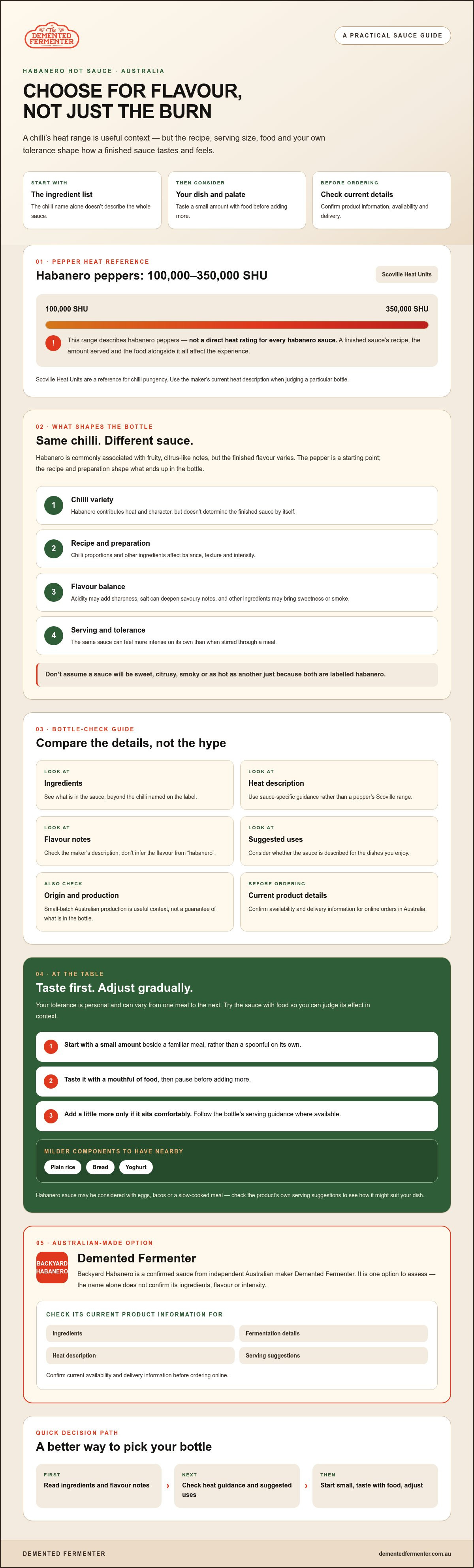
What if the best habanero hot sauce for your table isn’t the one with the biggest burn? When browsing habanero hot sauce Australia options, it can be hard to tell whether a bottle will bring bright flavour, lingering heat or both. Habanero peppers range from 100,000 to 350,000 Scoville Heat Units, but that figure alone can’t tell you how a finished sauce will taste or feel.
Product descriptions can call a sauce “fiery” without explaining how it might work with eggs, tacos or a slow-cooked meal. Habanero is often associated with fruity, citrus-like notes, but each sauce has its own balance. Check the ingredient list, heat description and serving suggestions rather than relying on the chilli name alone.
This guide explains what shapes habanero heat, how to choose a sauce for your palate and cooking, and what to check before ordering online in Australia. Small-batch Australian production can be useful context, but it doesn’t tell you exactly what’s in a bottle. Demented Fermenter’s Backyard Habanero is one option to assess using its current product details.
Key Takeaways
- Separate the chilli’s identity from the finished sauce: its recipe and preparation shape what ends up in the bottle.
- When comparing habanero hot sauce australia options, check ingredients, heat descriptions, flavour notes, origin and suggested uses rather than relying on claims like “hottest”.
- Match the sauce to the dish. Start with a small amount, taste, then adjust to suit your tolerance.
- Backyard Habanero is a confirmed sauce from independent Australian maker Demented Fermenter. Check its current product details before choosing.
- Use small-batch Australian production as context, then confirm current availability and delivery information before ordering online.
What makes habanero hot sauce different from other chilli sauces?
Habanero hot sauce is made with habanero peppers, a variety commonly associated with the Capsicum chinense species. The chilli contributes heat and character, but it doesn’t determine the finished sauce on its own. Other ingredients and preparation affect the result, so two bottles bearing the same chilli name can taste and feel quite different.
Heat is only one part of the experience. Acidity, salt and other ingredients shape how a sauce tastes with food and how its chilli warmth comes through. It might be sharp, savoury, sweet or smoky, but “habanero” alone won’t tell you which. When comparing habanero hot sauce Australia options, look at the recipe as well as the pepper named on the label.
What is a habanero chilli?
Habaneros are generally small, often lantern-shaped chillies, though their colour and characteristics can vary by cultivar and ripeness. They’re widely recognised for substantial heat. The range cited in this article is 100,000 to 350,000 Scoville Heat Units for habanero peppers. That’s a reference for the chilli, not a direct rating of every sauce made with it. For a broader overview of the pepper’s origin, cultivars and heat, see Habanero.
Capsaicin is the compound responsible for chilli heat. It activates heat-sensitive receptors in the body, creating the familiar burning sensation. The intensity can vary with the chilli, how it’s prepared and the amount eaten. A pepper’s identity is a starting point, not a precise prediction of how it will taste in a meal.
Why do habanero sauces taste different from one another?
The recipe sets a sauce’s character. The proportion of chilli, the ingredients used alongside it and the way it’s prepared can all affect its balance, texture and intensity. Acidity may bring a sharper edge, salt can deepen savoury notes, and other ingredients may add sweetness or smoke. These are possibilities, not guarantees. The chilli name alone confirms none of them.
Keep the distinction simple: the variety tells you which chilli is involved; the ingredient list and product description tell you more about the sauce. Don’t assume a habanero sauce will be sweet, citrusy, smoky or as hot as another. For Backyard Habanero, check the current product information for its ingredients, fermentation details, heat description and serving suggestions. The product name is confirmed, but its specific flavour and intensity shouldn’t be guessed.
How hot is habanero sauce, and how should you judge the heat?
A chilli’s reputation can suggest a lively sauce, but it can’t tell you exactly how hot a particular bottle will feel. The finished recipe, the amount on your plate and your own tolerance all matter. The same sauce may also seem more intense on its own than when stirred through a meal.
When choosing habanero hot sauce australia wide, ask how the sauce might feel in the way you plan to eat it, rather than relying only on the chilli’s reputation. Use heat descriptions as a guide and check the maker’s current product details for sauce-specific information.
Can the Scoville scale tell you exactly how hot a sauce feels?
The Scoville scale describes chilli pungency in Scoville Heat Units (SHU), a reference for the concentration of heat-producing compounds. It can help compare chillies, but it doesn’t promise how a finished sauce will feel. A sauce combines chillies with other ingredients in particular proportions, and both serving size and the food alongside it affect the experience. Look for the maker’s current heat description instead of treating a chilli rating as a sauce rating.
How can you serve habanero sauce without overwhelming a meal?
Start with a small dab beside a familiar meal, such as roast vegetables or rice, and taste it with a mouthful of food. If the heat sits comfortably, add a little more. This lets you notice the sauce’s effect before it takes over the plate.
A practical approach at the table:
- Start with a small amount, not a spoonful on its own.
- Taste it with the dish, then pause before adding more.
- Keep milder components nearby, such as plain rice, bread or yoghurt, so each diner can adjust their plate.
Your tolerance is personal and can vary from one meal to the next. Follow the serving guidance on the bottle where available, especially when sharing with people whose preferences you don’t know. For Backyard Habanero, check the current product description rather than guessing its intensity from the name. You can check Backyard Habanero details before deciding whether it suits your table.
What should you look for when comparing habanero hot sauce in Australia?
Compare details you can verify, not bold claims that a sauce is “the hottest” or “the best”. Check the ingredient list, heat description and suggested uses, then consider where it’s made and how the maker describes its production. Use the table as a quick checklist when comparing habanero hot sauce Australia options.
| What to check | Questions to ask |
|---|---|
| Ingredients | Is the ingredient list clear? Check for ingredients or allergens that matter to you before serving. |
| Heat description | Is the heat guidance specific to this sauce, rather than only describing the chilli? Does it help you judge how much to try? |
| Flavour notes | Does the maker describe the sauce’s balance, or name ingredients that suggest how it might suit your cooking? Treat vague claims as a prompt to check further. |
| Origin and production | Does the current product information confirm where it’s made and explain its production approach? |
| Suggested use | Are there serving ideas that fit the food you want to pair it with? Check the packaging for storage and best-before information, too. |
Which details on a habanero sauce label matter most?
Read the label alongside the current product page. Look for ingredients, allergen information, a product-specific heat description and serving suggestions. Packaging can also explain how to store the sauce and when to use it by. If details are missing or unclear, don’t fill the gaps with assumptions based on the habanero name.
How do you compare artisan and mass-market sauce options?
Compare what each maker shares about ingredients, production, origin and intended use. One style of production doesn’t guarantee a particular flavour or heat. “Small-batch” describes scale, not what you’ll taste.
Demented Fermenter is an independent Australian maker of small-batch, naturally fermented hot sauces. That’s useful context about the maker, but check the current Backyard Habanero product information for its ingredients and production details. To compare fermented and vinegar-based sauces, look at what each maker says about the individual product. Don’t assume its method or ingredients from the category alone. Choose based on the details that fit your palate and meal.
How do you match habanero hot sauce with food and your heat tolerance?
Let the dish lead. A sauce that works with a rich meal may overwhelm something delicate, and its acidity, salt and other ingredients can shift the balance as much as the chilli. Check the sauce’s product notes, then follow a simple tasting sequence: choose a dish, add a small amount, taste it with the food and adjust gradually.
For a shared meal, serve the sauce on the side rather than mixing it through the whole dish. Ask guests about their heat tolerance and let everyone season their own plate. That leaves room for different preferences at the table.
Which foods can work well with habanero sauce?
Eggs, grilled foods, tacos, soups and roasted vegetables are useful starting points, but the right match depends on the sauce. If its product notes describe noticeable acidity, consider how that will sit alongside an already tangy dish. If salt is prominent, take care not to over-season the rest of the meal. Don’t assume a flavour profile from the habanero name alone.
Creamy, starchy or fresh accompaniments can help balance a spicy plate. Try a creamy topping, plain rice or a fresh salad, then adjust to taste. These won’t remove the heat, but they can soften the overall impression and make each bite feel more balanced.
How should beginners taste a hotter sauce?
Use a clean utensil to place a small dab on a bite of food, rather than straight onto your tongue. Taste it with the dish, then wait briefly before deciding whether to add more. Chilli warmth can build across successive tastes, and individual tolerance varies, so there’s no universal serving amount for everyone.
For Backyard Habanero, use the current product description and serving suggestions to guide your first pairing. Don’t infer its heat or flavour from its name. If it sounds suited to your table, review Backyard Habanero product details before choosing how to serve it.
Is Backyard Habanero the right Australian hot sauce for your table?
Backyard Habanero is a confirmed sauce from Demented Fermenter, an independent Australian maker focused on small-batch, naturally fermented hot sauces. That background gives context, but it can’t tell you the sauce’s exact ingredients, heat or flavour. Those details belong to the product itself. When comparing habanero hot sauce australia options, use the current product information to decide whether this sauce fits your palate and the food you have in mind.
Before ordering, check the live product page for:
- Ingredients and preparation: Read the listed ingredients and any explanation of how this sauce is made.
- Flavour and heat notes: Use the maker’s description of this specific sauce, not general assumptions about habaneros.
- Serving suggestions: Check whether the suggested uses suit the meals you want to make.
- Packaging and storage: Confirm current bottle details and follow the storage guidance on the product page or packaging.
- Availability and delivery: Review current stock and delivery terms before placing an order.
Demented Fermenter’s wider range includes Australian native ingredients, but don’t assume they’re in Backyard Habanero unless its current ingredient list says so. The same applies to fermentation details: the maker’s general approach doesn’t replace product-specific information. Read what’s stated for this bottle and let those details guide your expectations.
How can you order habanero hot sauce online in Australia?
You can order through the maker’s online shop, with orders shipped across Australia. Availability and delivery arrangements can change, so check the current listing and delivery terms before buying. Reviewing the ingredients, heat description and serving suggestions gives you a clearer basis for deciding than the chilli name alone.
Take your time, check the details and choose for the meals you enjoy. Explore Backyard Habanero.
Choose a heat that suits your table
A habanero’s reputation offers a clue, but the sauce’s ingredients, heat description and serving suggestions are better guides to what’s in the bottle. Start with a small amount, taste it with food and adjust to your comfort. That’s a more useful way to compare habanero hot sauce australia options than chasing claims about the hottest sauce.
Backyard Habanero is a confirmed product from Demented Fermenter, an independent Australian maker of small-batch hot sauces. Before ordering, check its current product details for ingredients, flavour and heat notes, then review delivery terms. Online orders are shipped across Australia, subject to current delivery information.
To decide whether it fits the meals you love, explore Backyard Habanero and check its current product details. Find your own balance, one considered taste at a time.
Frequently Asked Questions
How hot is habanero hot sauce compared with jalapeño sauce?
Habanero sauce is generally hotter than jalapeño sauce, but the chilli alone can’t predict the heat of every bottle. The amount of each pepper, other ingredients and serving size all affect the result. A jalapeño sauce can still feel quite lively, while a habanero sauce’s intensity varies by recipe. Check each maker’s product-specific heat description and start with a small taste.
Is habanero hot sauce too hot for beginners?
Not necessarily, but beginners should taste cautiously because habanero sauces can bring substantial heat. Put a small dab on a bite of familiar food rather than tasting a spoonful on its own. Wait briefly before adding more, as warmth may build over successive tastes. Heat tolerance is personal, so follow the maker’s serving suggestions and keep the bottle on the side when sharing a meal.
What does habanero hot sauce taste like?
Habanero chillies are often associated with fruity, citrus-like notes as well as heat, but the finished sauce can taste quite different depending on its recipe. Acidity, salt and other ingredients can shape the balance, bringing sharper, savoury, sweet or smoky qualities. Don’t assume a particular flavour from the chilli name alone. Check the product’s ingredient list and the maker’s description, especially for Backyard Habanero.
Can you cook with habanero hot sauce or should you add it after cooking?
You can do either, depending on how much control you want. Stir a little into a soup, sauce or stew near the end of cooking, taste, then adjust. Adding it to the finished plate lets each person choose their own heat. Follow the maker’s serving guidance, and avoid adding a large amount to a shared pot before you know how the sauce works in that dish.
How much habanero hot sauce should I use in a meal?
Start with a small dab, then taste it with a mouthful of the meal before deciding whether to add more. There’s no universal amount: sauce intensity, portion size, other ingredients and your heat tolerance all affect the balance. Use a clean utensil to avoid contaminating the bottle, and keep extra sauce on the table so diners can adjust their own plates.
What foods go well with habanero hot sauce?
Try a small amount with eggs, grilled foods, tacos, soups or roasted vegetables, then see how the sauce’s flavour notes suit the dish. Acidity can complement rich food, while a creamy topping, plain rice or fresh salad can balance a spicy plate. These are starting points, not fixed rules. Check the maker’s serving suggestions, as ingredients and flavour balance differ between sauces.
Where can I buy habanero hot sauce online in Australia?
You can buy Backyard Habanero through Demented Fermenter’s online shop. The independent Australian maker produces small-batch hot sauces and ships online orders across Australia. Before ordering, check the current product page for ingredients, heat notes, serving guidance and availability, then review delivery terms for your address. That gives you a clearer idea of what’s in the bottle and what to expect.